About Me

- Zoy
- Aurora, Canada
- Holistic lover, enjoy biodynamic gardening, natural life style and herbal medicine.

Subscribe To



 Posts
All Comments
Posts
All Comments


The Queen of Herbs
 The word "Lavender" comes from the Latin "lavare" which means "to wash". According to folklore lavender is a favourite scent of the elves, which is why it is sometimes referred to as Elf Leaf.
 Lavender herb originally comes from Western Europe. A member of the Mint family, Lavender is the most popular of aromatic herbs. Since ancient Roman times and before, people have loved Lavender for its beautiful, fresh scent, attractive flowering habit, and its 'lucky' reputation.
Most lavender herbs have small, narrow leaves of a gray-green color. Some have wider, toothed leaves and some have feathery, fernlike leaves. The flowers of lavender arise on long stems and consist of whorls of tiny flowers. Flower colors range from deep purple to paler blues and shades of violet, pink and white. The flowers are very attractive to bees and butterflies.
Lavender herb is a hardy perennial that has many uses in crafts, aromatherapy, cooking and decorating. Lavender planted in the garden is a natural pest deterrent, discouraging fleas and flies.
Planting
Lavender is an easy herb to grow and is very rewarding too.
- Pot size at least 7.5" container.
- Seed Spacing Sow Lavender seeds quite shallowly, barely covering with the soil.
- Seed Germination 10 to 28 days.
- Plant Spacing Lavender plants should be spaced 18 to 24 inches (45 - 60cm) apart.
- Water Requirements Water on a regular schedule, do not overwater.
- Soil Requirements Light, well-drained, deep, not overly rich soil.
- Growing Mix Mix the potting compost with peat or coarse sand.
- Fertilizer Lavender is very sensitive to over fertilization. Use a small amount of complete fertilizer or dynamic lifter once a year
- Sun Requirements Lavender prefers full sun but can tolerate some shade. It needs 8 to 12 hours of sun a day.
Lavender is a very special herbal tisane which has calming effects that helps relieve stress, fatigue, headache and insomnia. Drinking a cup of Lavender tea before going to bed is known to promote restful sleep. Suffering from a hangover – drink lavender tea. Make an infusion with three lavender sprigs in a tea pot for the morning after. Lavender tea blends well with peppermint leaves.
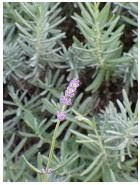
Lavender is a natural antiseptic cleanser. Lavender soaps are a natural way to clean and heal the skin. Dried flowers and seeds are used in herbal sleep pillows and baths for soothing and calming frayed nerves.
Lavender essential oil is used for a number of medical conditions: to soothe the skin, for digestion, for headaches and insomnia, for nervousness and anxiety, for depressive feelings, and for stress relief.
As a Magical herb lavender is used for peace and love.
Related Articles:
Non-Addictive Tranquilliser
 Valerian, Valeriana officinalis, also known as Garden Valerian, is an herb native to Europe and Asia that currently grows in most parts of the world. The name is believed to come from the Latin word "valere" meaning to be healthy or strong. Valerian remains popular in North America, Europe, and Japan and is widely used to treat insomnia and anxiety.
Valerian is a perennial herb which grows up to 1 metre in height. Its rootstock is thicker than the stem, producing suckers or shoots rising from the ground. The stems are furrowed, hairy below and smooth above, whereas its lower leaves are long compared to the smaller upper leaves. The plant has small, white flowers in small clusters and small and smooth fruit.
Valerian has been used as a medicinal herb since at least the time of ancient Greece and Rome. Its therapeutic uses were described by Hippocrates, and in the 2nd century, Galen prescribed valerian herb for insomnia. In medieval Sweden, it was sometimes placed in the wedding clothes of the groom to ward off the "envy" of the elves. Valerian was used as a perfume in the sixteenth century.
Culture
- Seed Spasing Lay the seed on the soil surface and do not allow it to dry out.
- Seed Germination 12 to 21 days. Seeds require light to germinate.
- Plant Spacing About 8" apart.
- Soil Requirements This plant is tolerant of most soils, but does best with soil that is kept moist.
- Sun & Lighting It will grow in any sunlight, as long as its roots are cool.
- Water Requirements Keep the plant well watered.
The herb Valerian has been used for its healing properties for centuries; both as a herb and an essential oil, Valerian has many medicinal uses for today's problems.
Many studies have demonstrated the effectiveness of valerian as a sleep aid, especially when combined with St. John's wort or Lemon Balm. And, unlike many pharmaceutical "sleeping pills," valerian won't cause feelings of grogginess upon waking or lead to a chemical dependency. The sedating effect of valerian on the central nervous system may help reduce muscle spasms and prevent convulsions.
While valerian herb is most commonly administered orally, it may also be added to bath water to help relieve nervousness and to induce sleep. Similarly, valerian can be boiled and the resulting steam can be inhaled to produce the same effect. Valerian also appears to be useful in relieving menopausal symptoms and menstrual discomfort.
Some herbalists have also recommended it for tension headaches, bronchial spasms, lingering coughs, and as a muscle relaxant to treat pain.
Cats are attracted to a valerian which has an effect on their nervous system. They find valerian irresistible and will roll in the plant if the leaves have been disturbed or bruised, releasing the scent.
Related Articles:
;;
Subscribe to:
Posts (Atom)