About Me

- Zoy
- Aurora, Canada
- Holistic lover, enjoy biodynamic gardening, natural life style and herbal medicine.

Subscribe To



 Posts
All Comments
Posts
All Comments


Source of healing and general well-being
 Many hundreds of herbs are known to have medicinal qualities. Even in light of modern synthetic medicines many people are looking to herbs as a source of healing, disease prevention, and general well-being. Used correctly and wisely, herbs can provide desirable medicinal results without adverse side effects.
Many hundreds of herbs are known to have medicinal qualities. Even in light of modern synthetic medicines many people are looking to herbs as a source of healing, disease prevention, and general well-being. Used correctly and wisely, herbs can provide desirable medicinal results without adverse side effects.
Therapeutical properties of medical herbs are very useful in healing various diseases and the advantage of these medicinal plants is being 100% natural.
Nowadays people are being bombarded with thousand of unhealthy products, the level of sensibility in front of diseases is very high and that's why the use of medicinal plants can represent the best solution.
Healing with herbs is an old tradition that most of us are aware of but not all of us use. Here you will find some gentle herbs that can take the sting out of simple bug bites or soothe a aching stomach. Easy to grow, these herbs will be well worth the effort.
The most common medicinal herbs:
Astragalus
Burdock
Cayenne
Echinacea
Feverfew
German Chamomile
Lemon Balm
Milk Thistle
Peppermint
St. John's Wort
Valerian
Yarrow
How to Start Your Own Herb Garden
 There are tons of different home gardening tips, indoor gardening tips, organic gardening tips, vegetable gardening tips - no wonder you can find it so overwhelming to figure out just which specific tips are going to be most useful. If this is your situation, you should know that out of all of these, there are a few home gardening tips in particular that are going to be useful for you to learn.
Why would you go for an indoor garden?
It will make your house look nice, and you feel good. You'll almost never need to brave the harsher weather elements that nature will throw at you for trying to compete with her. And ultimately in the grand scheme of things, it's good for you.
It's difficult to imagine how indoor gardening could be good for you, but really it has nothing to do with the gardening itself, more with the plants instead. If you hark back to the good old days of high school and peer pressure, you might just remember vaguely hearing something in science class about plants and photo-something-or-other.
Just to remind, it's a procedure called photosynthesis, where plants remove carbon dioxide from the air, and release oxygen into it instead, thereby removing pollutants from our environment. If you're living in a jungle there's not too much of a problem with that, but living as we are in our singular little houses, indoor plants are the next best thing.
A simple and easy place to start with would be try your hand at herb gardening. Simple to grow, useful in the kitchen, and best of all not the prima donna type.
Gardening, of any kind, just doesn't get any better than indoor gardening.
Best of the Primary Home Gardening Tips
- Easy maintenance and low costs are the main advantages of herb gardening. If you opt for indoor gardening, make sure you choose appropriate pots or containers.
- First you’ll want to choose the herbs that you’ll plant. You might have a hard time doing this because of the huge scope of herbs available. When I got ready to start my herb garden, I took a look at the spices in my kitchen cabinet and decide which ones I enjoy the most. I made a list of all the herbs my family and I enjoy and those are the ones I planted in my herb garden. By planting your own collection of these herbs, you can save money on buying them from the grocery store while having the added benefit of freshness. Some of the herbs you might start with are listed in cooking herbs, medical herbs and tea herbs posts.
- When getting started your herb garden, you should remember that the soil should have extremely good drainage. If the dirt gets watered and stays completely saturated, you have no chance of ever growing a healthy plant. One of the best ways to fix the drainage problem is put a layer of crushed rocks at the bottom of the pot or a container you are going to use. This will allow an extra water to escape, thus saving your plants.
- Ensure that the soil is of very good quality. In fact, if the purchased soil has organic matter added to it, so much the better; the herbs will grow faster. If you feel that soil quality does not matter, then you should not worry about the quality of your herbs either!
- Indoors or outdoors, no plant can live without sunlight. Most of the herbs need to be under direct sunlight; so placing them near windows is best. But it would be wise to keep the plants a few inches away from the window and not in direct contact with the window glass or window sill. During winter months, the temperature near the window is much cooler than the temperature a little inside the room.
- The plants in your indoor herb garden need trimming from time to time. Otherwise, they may become too big for the containers or pots. Trimming should be done with a pair of sharp scissors, never with a knife. A knife can damage the plants because a pulling motion is used.
- When you are ready to begin planting your herbs, you might be tempted to buy the more expensive plants from the store. However, with herbs it is much easier to grow them from seed than it is with other plants. Therefore you can save a bundle of money by sticking with seed packets.
- One of the often overlooked gardening tips by the new gardener is not paying attention to the proper time to begin seed starting. One of our tips is gardening by the phases of the moon. Gardening by the Moon is another option to introduce into your gardening to give you a bit of an edge when failure is NOT an option.
There is nothing like fresh herbs and especially, if you are the one that grew the herbs. So if you enjoy herbs or gardening, or both, then you should probably consider setting up an herb garden. It might require a little bit of work at first to set it up for optimal drainage, and pick what herbs you want to grow. But after the initial hassle, it’s just a matter of harvesting all your favourite herbs

Related Article:
Make your Garden Dreams a reality.
Best Gardening Sites:
This blog is dedicated to helping people with limited space to grow
fantastic gardens. Whether you are an apartment dweller or have a tiny
yard, the innovative ideas outlined in this blog will help you come up
with solutions to your space challenges. The unique methods will have
your neighbors talking and asking you how you did it. This is the
perfect blog for those who like trendy fashion and want to bring their
style into their gardens. We love the modern look of this blog and the
many pictures that document the adventures of the writers.
How to do Container Gardening – Tips for Beginners
Mini Garden teaches us all we need to know about container gardening, like growing a salad garden on your deck. They also believe in hydroponics and attracting ladybugs to your garden.
A blog dedicated to helping those gardeners who face the challenge of
growing with short seasons and cold weather. This is perfect for anybody
who lives in mountainous areas and climates where a hot summer day hits
about 80 degrees. Kathy Purdy understands the hurdles of cold climate
gardening and offers lot of solutions to readers going through the same
issues. A number of guest contributors appear on the site to spice
things up. We love that she responds to comments made by readers and
answers the questions that always seem to pop up after you have read
something.
Gardening
and landscaping have become very popular and inexpensive hobbies. There
is a wealth of information on the Internet to help you design your
dream garden or how about a butterfly garden? Hope you like it!
Rosemary Tea Acts as Medicine
 Rosemary, Rosmarinus officinalis, a member of the mint family, grows wild on the windswept Mediterranean coast but it is cultivated in many regions. Major producers for export are Yugoslavia, France, Spain and Portugal. Rosemary herb was once thought to ward off evil spirits. During the Middle Ages people slept with rosemary branches under their pillows to keep them safe from demons and nightmares. Demons can take many forms such as unpleasant odours, witchcraft and the Plague - rosemary plant has been burned or ingested or carried to prevent them all.
Early Greek students took the meaning more literally by wearing wreaths of rosemary around their heads to stimulate their memories during exams.
Rosemary plant is an attractive evergreen shrub, with lovely aromatic linear leaves. Coloured a dark shade of green above and white below, the leaves of the rosemary give off a beautiful fragrance, and with its small pale blue flowers, the plant is cultivated extensively in many kitchen gardens across America and elsewhere. The leaves are needle like, and the flowers are pale blue to lilac.
Rosemary herb can grow up 15 feet tall. It is easy to grow rosemary from slips or cuttings. The plant matures in about 85 days. It is essential to cut back the Rosemary plant in spring after it has flowered. You may pick the fresh leaves all year round as the Rosemary is an evergreen shrub. There is no need to store Rosemary if you have a bush that is established in your herb garden.
Rosemary is a very hardy herb and can tolerate drought.
Rosemary is a very hardy herb and can tolerate drought.
Culture
Pot size 12 inch Container.
Seed Spacing Sow the seed quite shallowly, barely covering and firm the soil.
Seed Germination 15 to 25 days.
Plant Spacing Rosemary plants should be spaced 18 to 24 inches (45 - 60cm) apart.
Water Requirements Average water needs. Water on a regular schedule, do not overwater.
Soil Requirements Light and well-draining.
Growing Mix Mix 50/50 of potting soil and sand or small gravel.
Fertilizing Feed Rosemary plant in the springtime with a kelp-based liquid fertilizer.
Sun Requirements Rosemary prefers full sun. It requires at least 5 hours of direct sunlight a day but eight hours a day is best.
Uses
Brew some fresh Rosemary in tea, adding a few fresh or dried leaves. Rosemary Tea increases circulation and slightly raises the blood pressure warming the body from the inside out. Rosemary Tea stimulates the liver and digestion, promotes blood circulation, tones up the blood vessels, invigorates, and increases your awareness. Use Rosemary Tea as a mouthwash for a bad breath.
While Rosemary blends well with other herbs, use it lightly on its own in lamb, pork, chicken, and veal dishes, as well as in soups and stews, vegetables, and sauces. Rosemary provides a wonderful flavor in breads and makes a good marinade with olive oil, wine, and garlic. The leaves are used fresh, dried, or frozen in many recipes.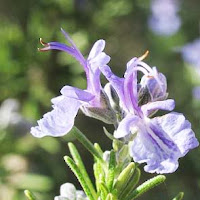
Rosemary has been found to be a stimulant and mild analgesic. The following health benefits are attributed to the Rosemary Tea:
• Rosemary tea fights headaches and fever
• Rosemary tea can be used to help treat epilepsy
• Rosemary tea counters poor circulation
• Rosemary tea can be used to fight rheumatism
• Rosemary tea may help improve memory
Other Uses
- Rosemary leaves can be used as potpourri to freshen the air. Use the dried leaves as potpourri and in sachets to scent clothes and linen and deter moths.
- Lay Rosemary sprigs amongst your linen where it will impart a wonderful fragrance to your linens.
- Burn Rosemary twigs after it has been pruned in your fireplace or on you barbeque.
- Rosemary is grown as a companion plant for cabbage, beans carrots and sage. It helps to deter cabbage moths, bean beetles and carrot flies.
- It is believed that some aromatic spices like sage, peppermint, savory, rosemary, and thyme, hold incredible value in sterilizing water that has been contaminated with unfriendly bacteria.
- The oil of Rosemary is used as a moth repellent.
Related Articles:
;;
Subscribe to:
Posts (Atom)